
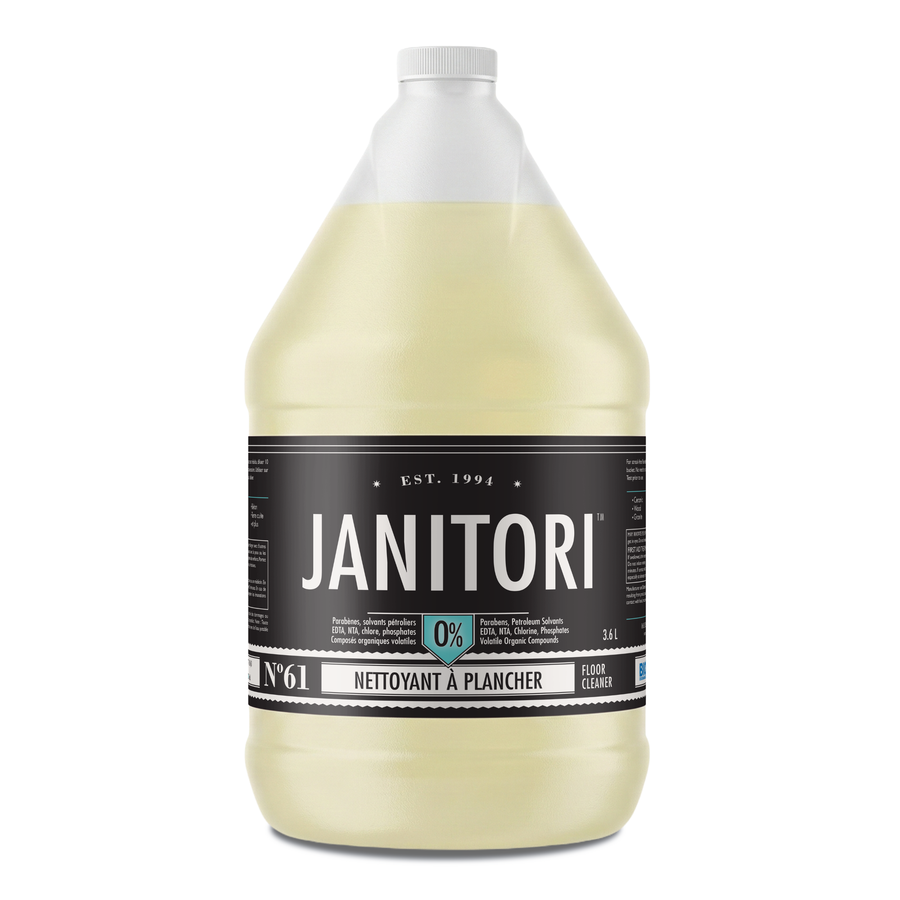
Floor Cleaner JANITORI™ - No.61
- Streak-free on hardwood, tile, stone, laminate, and concrete -- no haze, no sticky residue, no buildup
- Ultra-concentrated formula: 10 mL per bucket means one 4 L jug covers 400 mop sessions
- Zero VOCs -- safe for daily use in schools, daycares, hospitals, and pet-friendly homes
- Formula
- Plant-Derived Concentrate
- Biodegradable, non-toxic, low-residue
- Clean Claim
- 0% of 8 Harmful Chemicals
- No parabens, SLS, EDTA, NTA, chlorine, phosphates, petroleum solvents, or VOCs
- Dilution
- 10 mL per 10 L water
- Ultra-concentrated -- 4 L jug makes 400 buckets
- Origin
- Made in Montreal, QC
- Canadian-manufactured since 1994
Cost per application
Need drums, totes, or pallet quantities?
Quote back same business day.
Common questions
Will it damage hardwood floors?
No. No.61 is pH-neutral, contains no acids, no ammonia, and no abrasives. It's safe for sealed hardwood, engineered wood, bamboo, and cork. The low-residue formula won't build up a film over time the way many conventional floor cleaners do -- that film is what makes hardwood look dull after months of cleaning. Just dilute as directed (10 mL per 10 L water), damp-mop, and let dry.
How concentrated is it really?
10 mL per 10 L of water. That's two teaspoons per mop bucket. One 4 L jug gives you 400 buckets -- if you mop daily, that's over a year of supply from a single jug. Over-diluting won't clean effectively; over-concentrating wastes product and can leave residue. Stick to the ratio.
Does it leave a slippery film on tile or stone?
No. The formula is engineered for low residue specifically to avoid the slick film that conventional floor cleaners leave behind. This matters in commercial settings -- slippery floors are a liability issue. At the recommended dilution ratio, No.61 dries clean with no tackiness and no shine-dulling haze. If you see residue, you're using too much concentrate.
Can I use it on concrete warehouse or garage floors?
Yes. No.61 works on sealed and unsealed concrete, terrazzo, and epoxy-coated floors. For heavy-soiled concrete (warehouse, loading dock, shop floor), you can increase concentration slightly -- 15-20 mL per 10 L -- but for routine maintenance, the standard 10 mL ratio is sufficient. It won't etch, stain, or react with concrete the way acidic cleaners can.
Why not just use vinegar and water on my floors?
Vinegar is acidic (pH ~2.5). Over time, it strips the finish on hardwood, etches grout, dulls marble, and can damage stone sealants. It's also ineffective on grease. No.61 is pH-neutral, plant-derived, and formulated to lift dirt without attacking the surface underneath. At $0.105 per bucket, it costs roughly the same as a vinegar-water mix but actually protects your floors instead of slowly degrading them.
